Tool · IDE
SPEXR
The spec-based IDE where agents do the work and you keep command.
SPEXR inverts the usual layout: instead of bolting an agent into a sidebar, the
agent session is the primary surface and your files and terminals orbit it.
Specs are first-class artifacts: docs/specs/<id>.md becomes a plan, tasks, a
diff and a PR, and a drift detector flags divergence. A two-scope memory (user +
project) keeps what the agent learns.
It also ships local semantic search (hybrid keyword + embeddings, with one-line file descriptions generated on-device, no API calls, nothing leaves the machine), a full built-in Git provider, and Darkfactory: a wall of every local agent session across your config profiles, with live state, on-device summaries, and one-click resume.
Transparent about how it works: SPEXR does not call any hosted model API; it spawns your locally installed agent binary and reuses its stored credentials. Today that means a working agent CLI is a hard dependency; it runs Claude Code and opencode sessions side by side. It’s public beta: MIT, on macOS, Windows and Linux.
In use
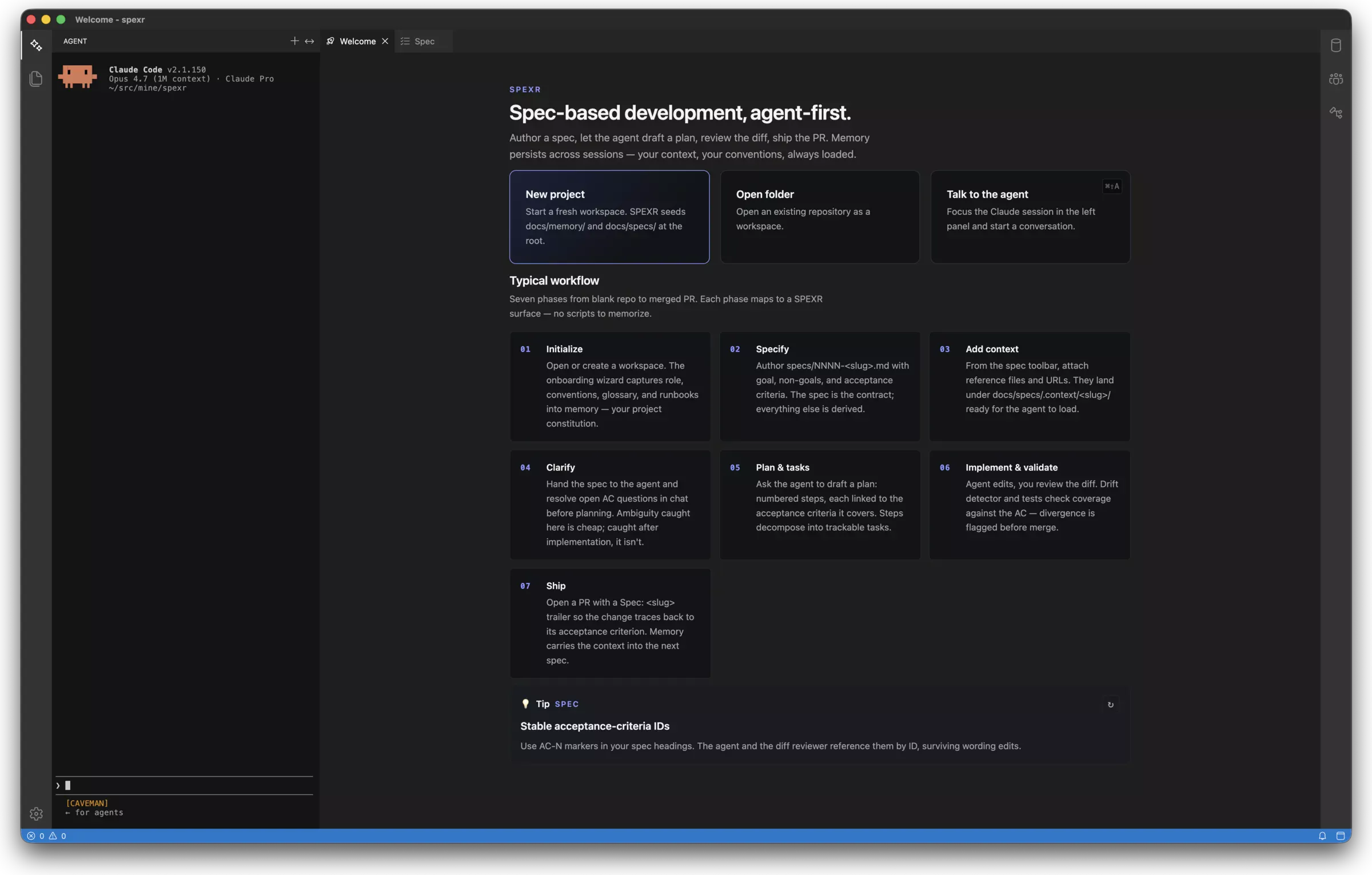
Welcome 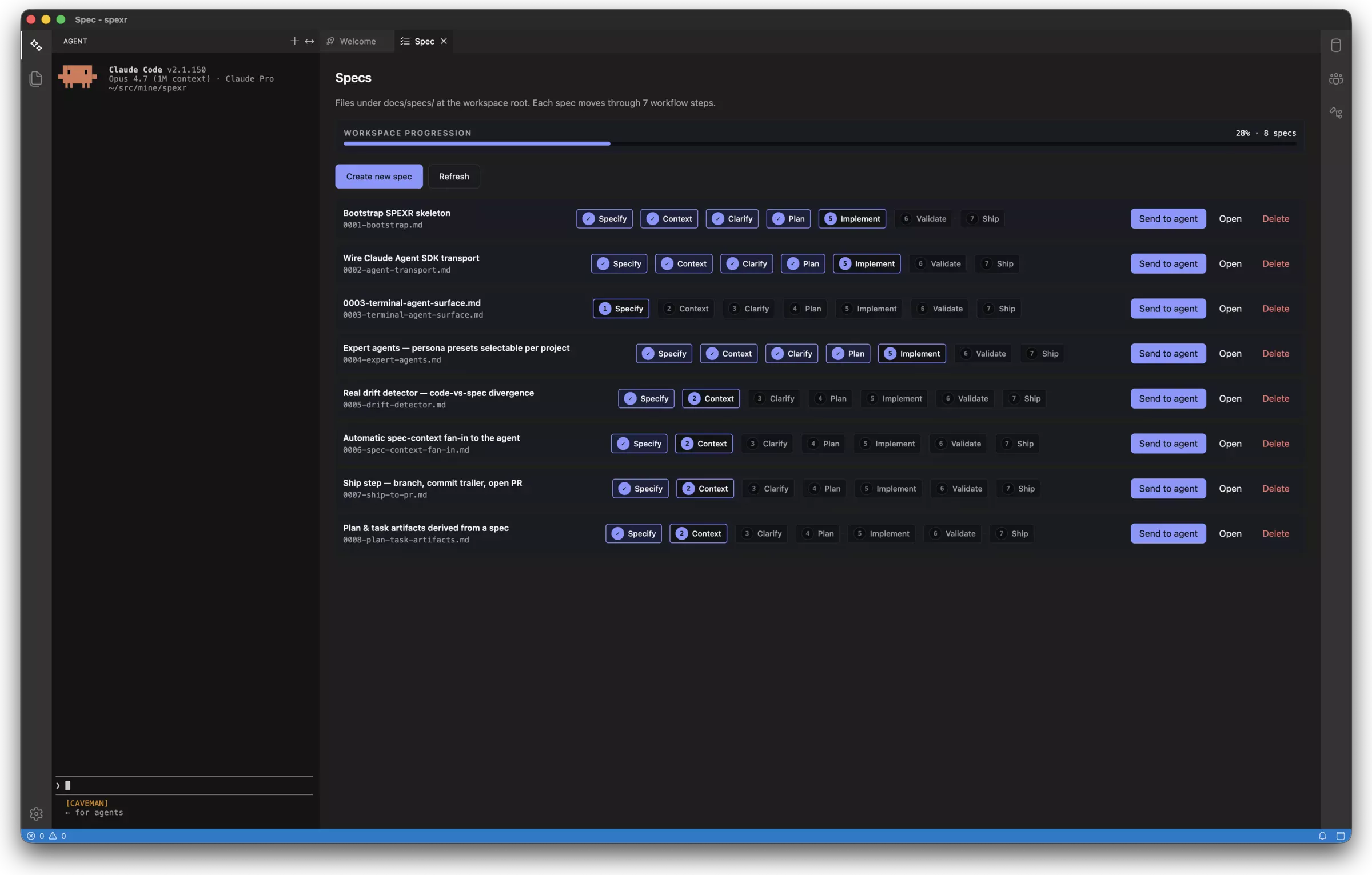
Specs, each on its seven-step workflow 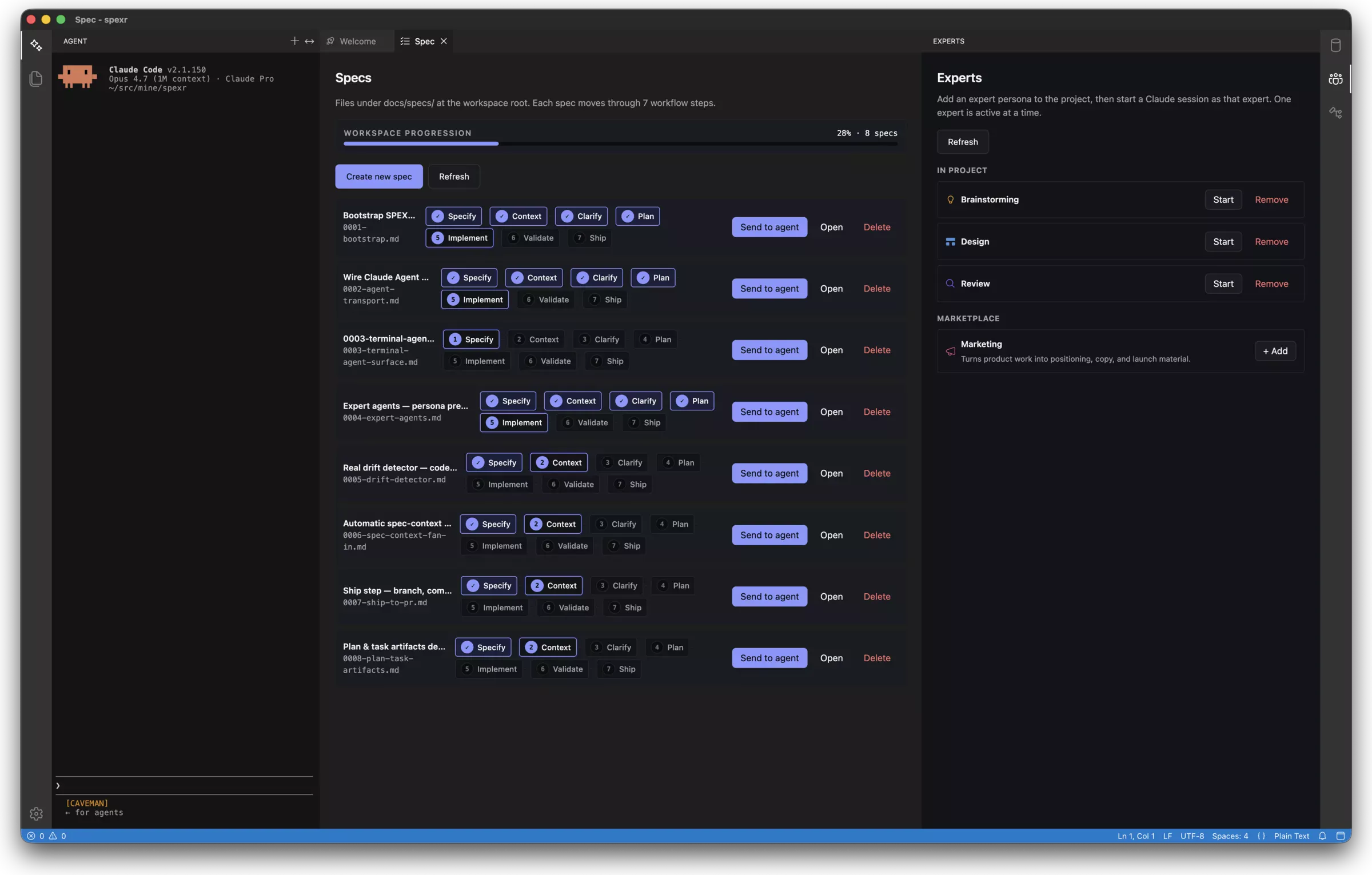
Expert agents 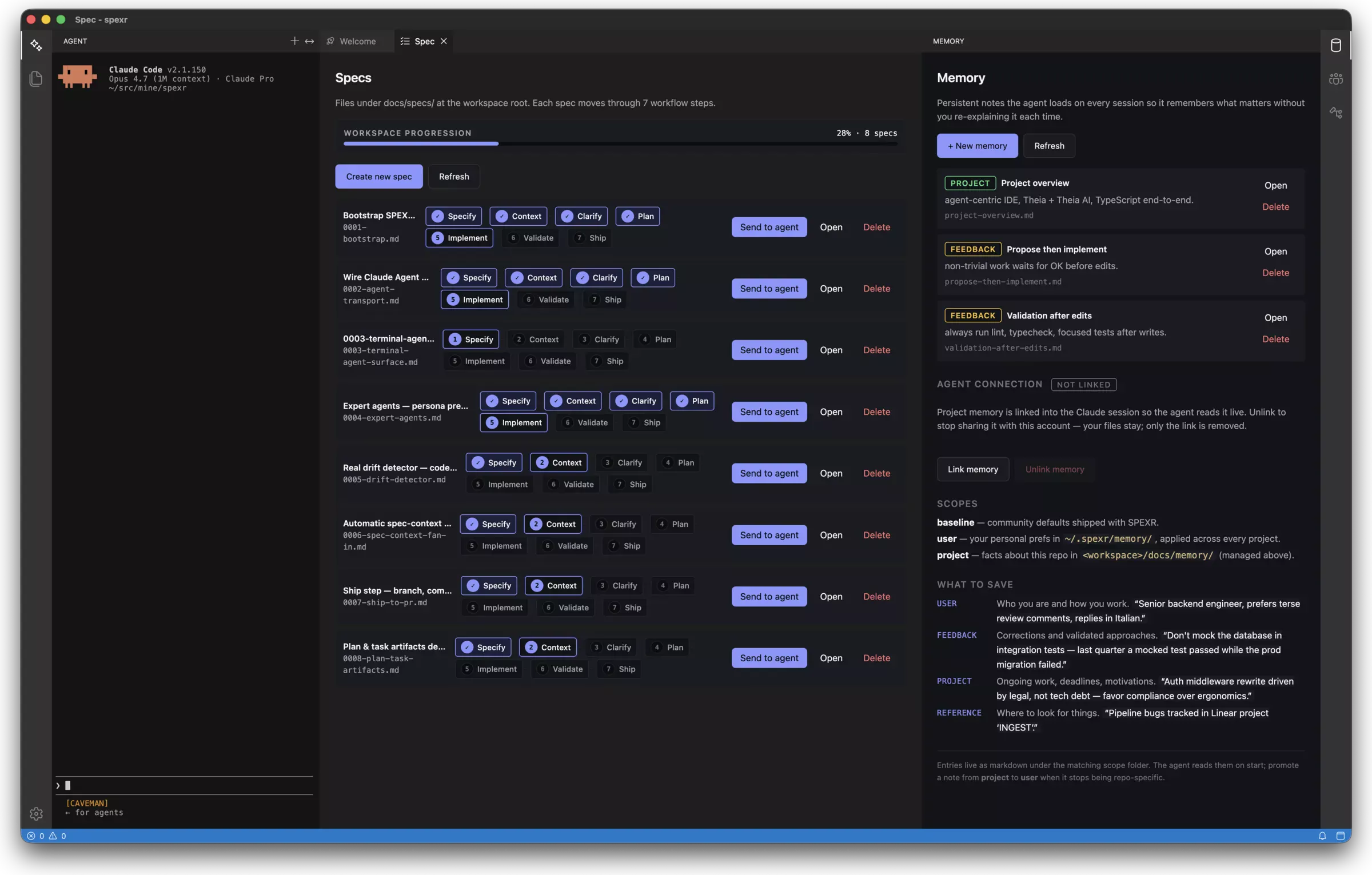
Memory the agent loads 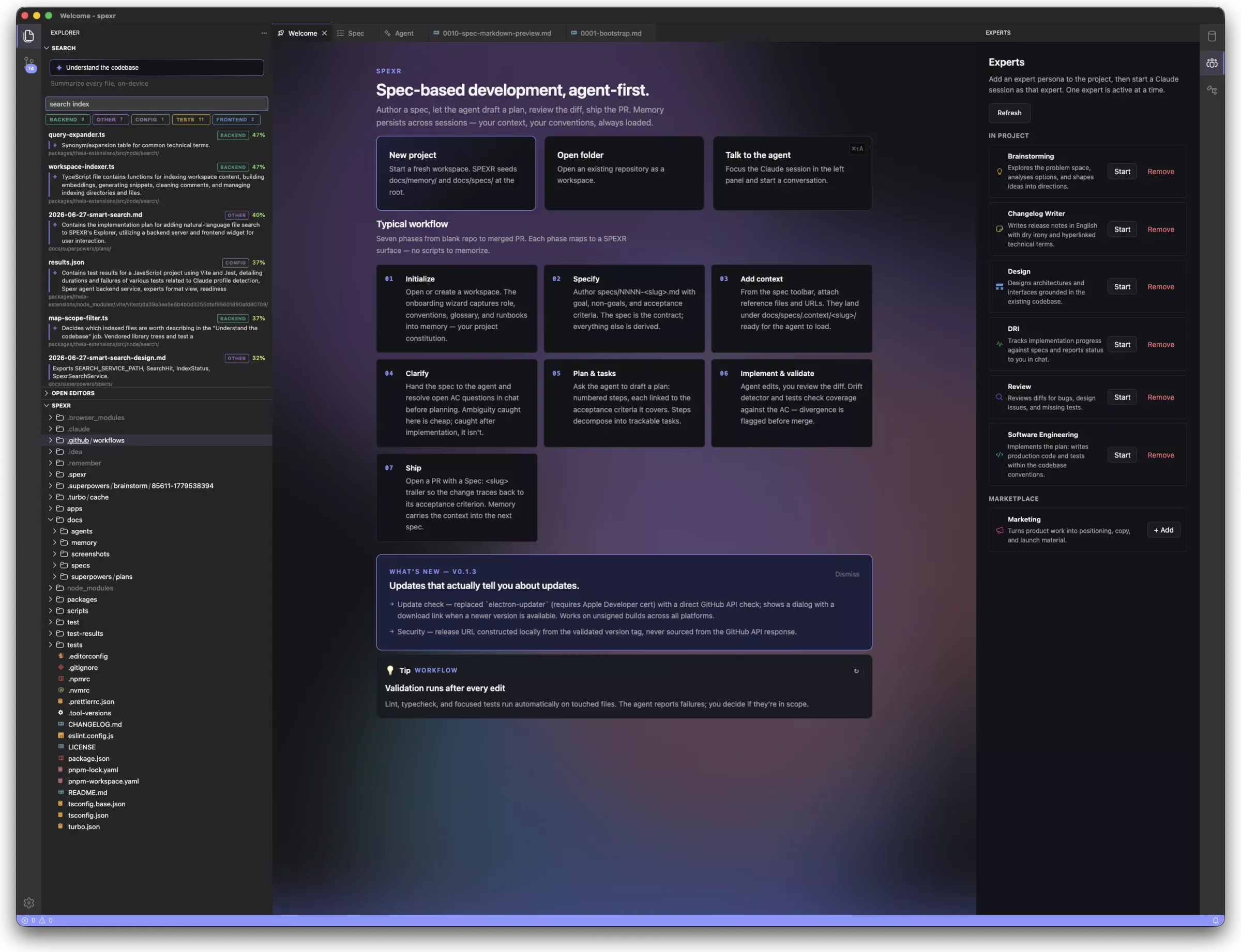
On-device smart search