SPEXR · public beta
The spec-based IDE where agents do the work and you keep command.
SPEXR puts the agent session at the centre and ties every change to a written spec. It runs the agent you already have installed, and its own AI features run on your machine.
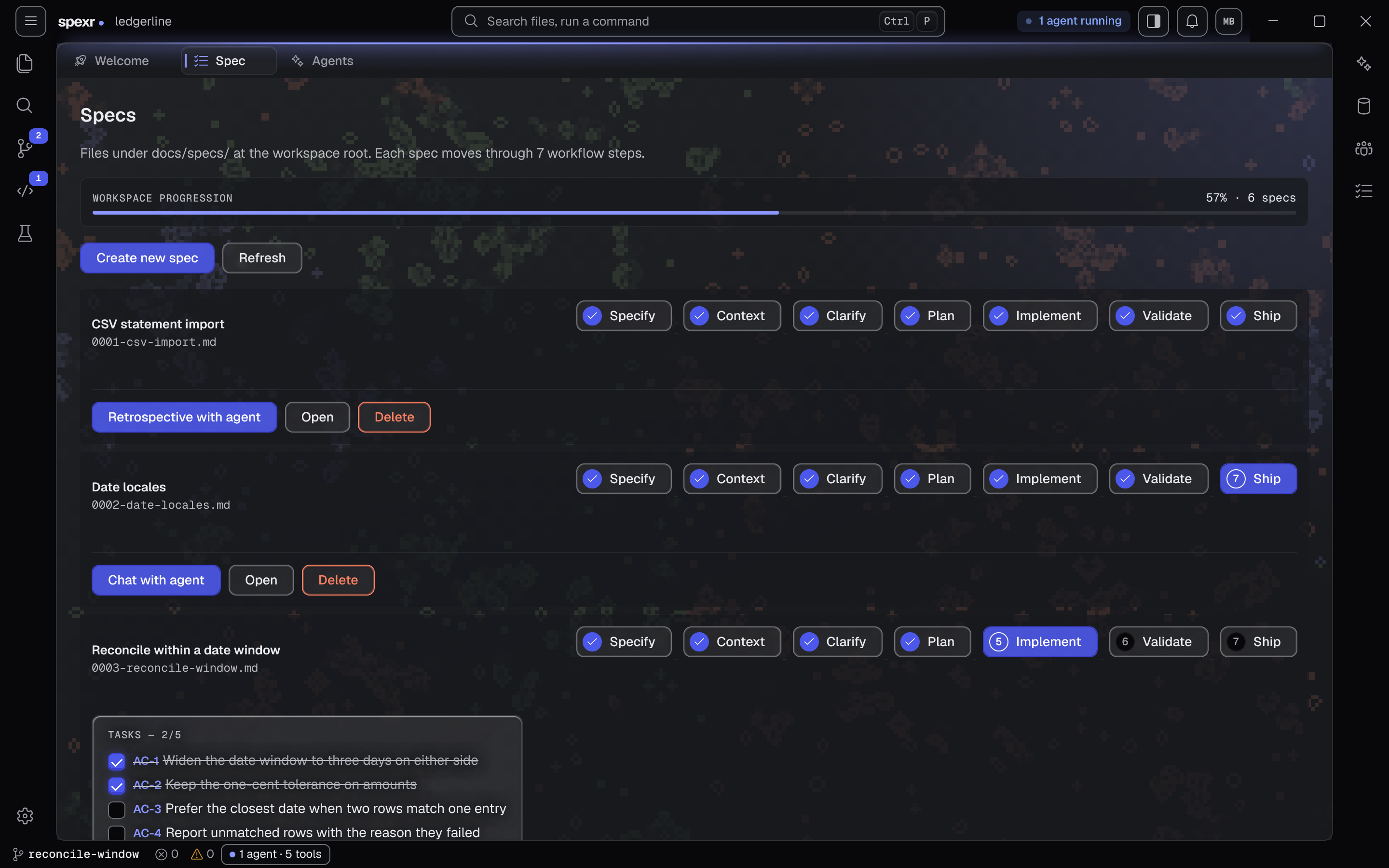
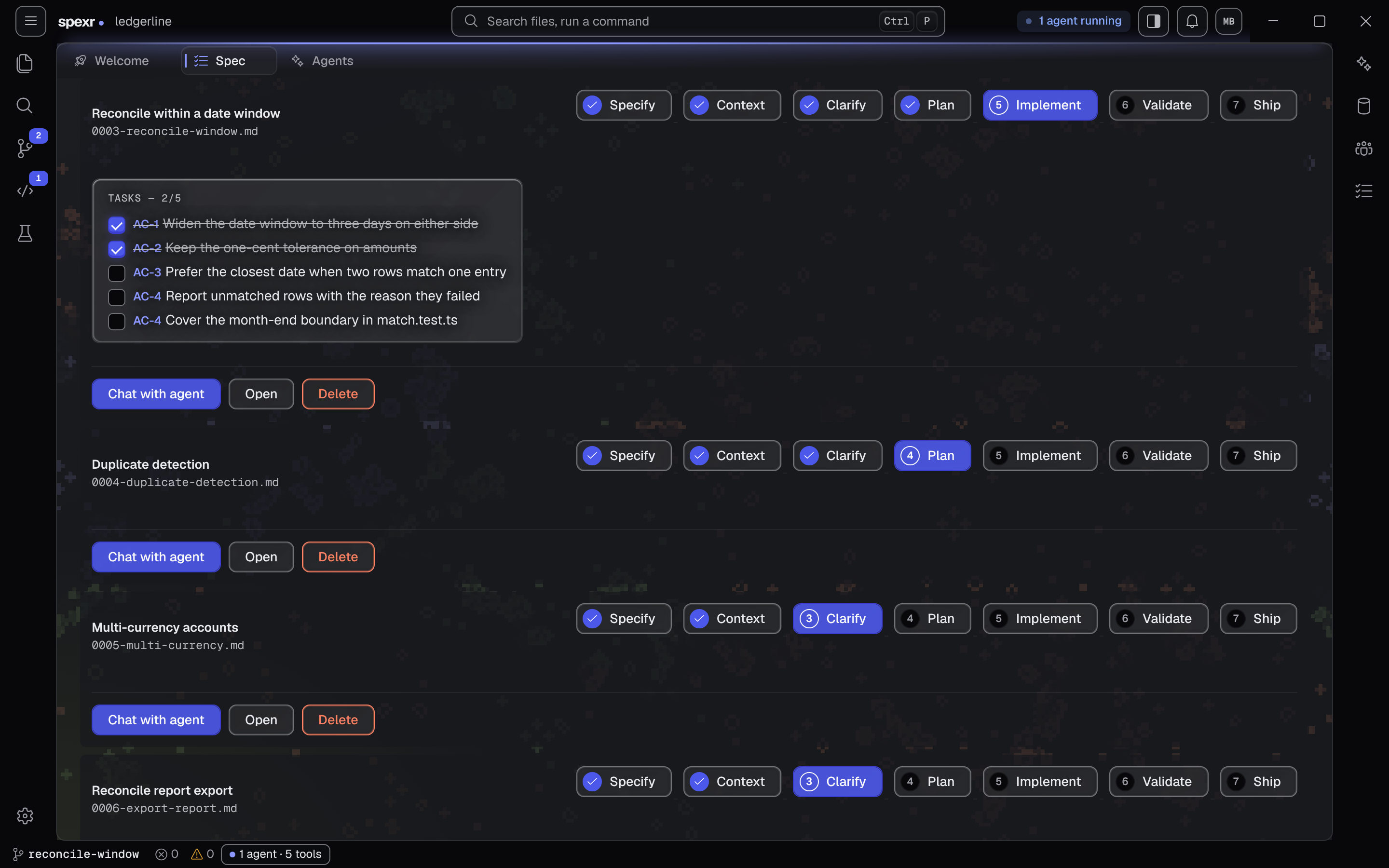
Specs
Every change starts as a spec.
A spec is a Markdown file with a goal and acceptance criteria. It moves through seven steps, from Specify to Ship, and SPEXR shows where each one stands.
Hand a spec to the agent and its context goes with it. The plan comes back as tasks you can tick off, and a drift check flags code that no longer matches what the spec asks.
Darkfactory
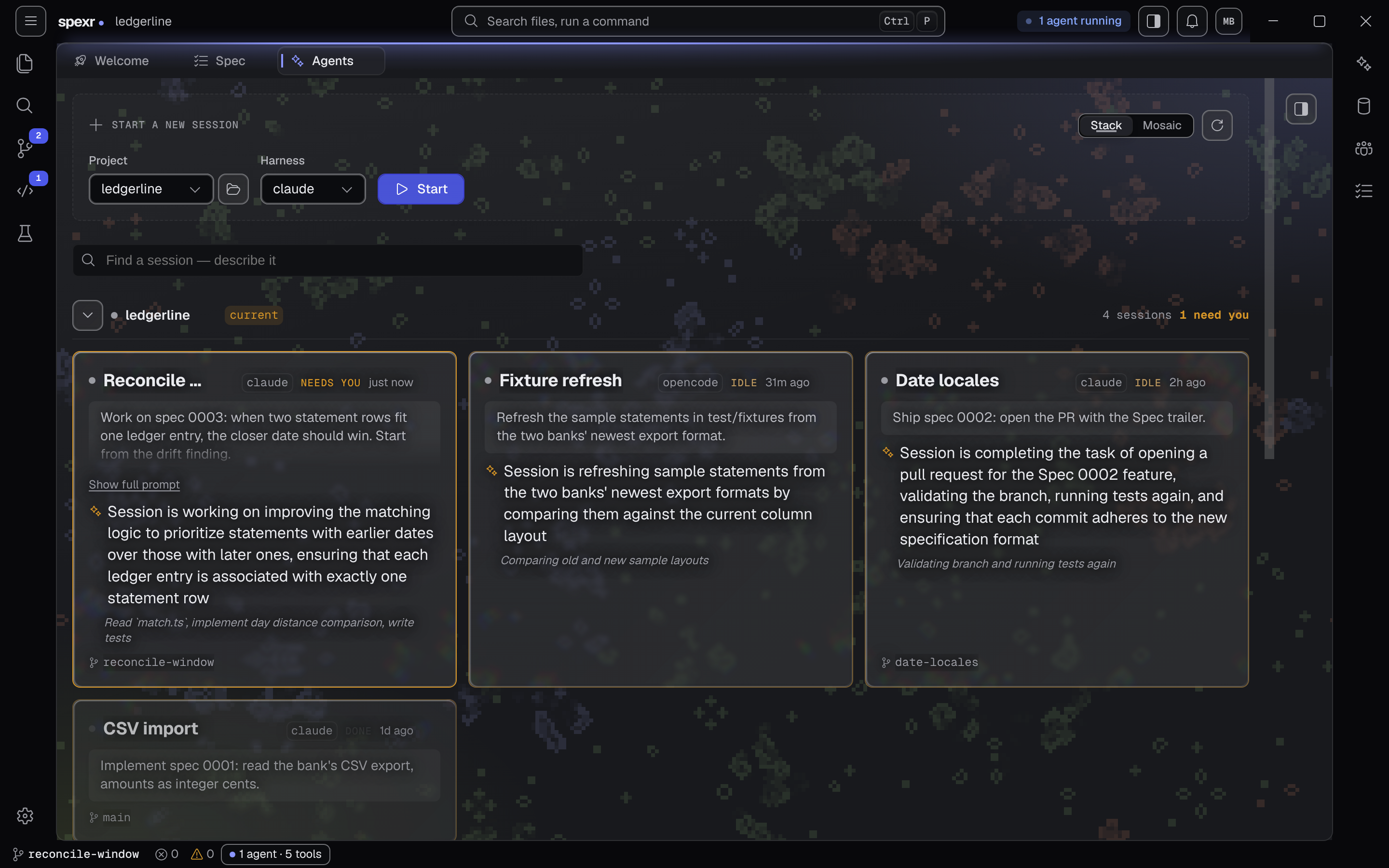
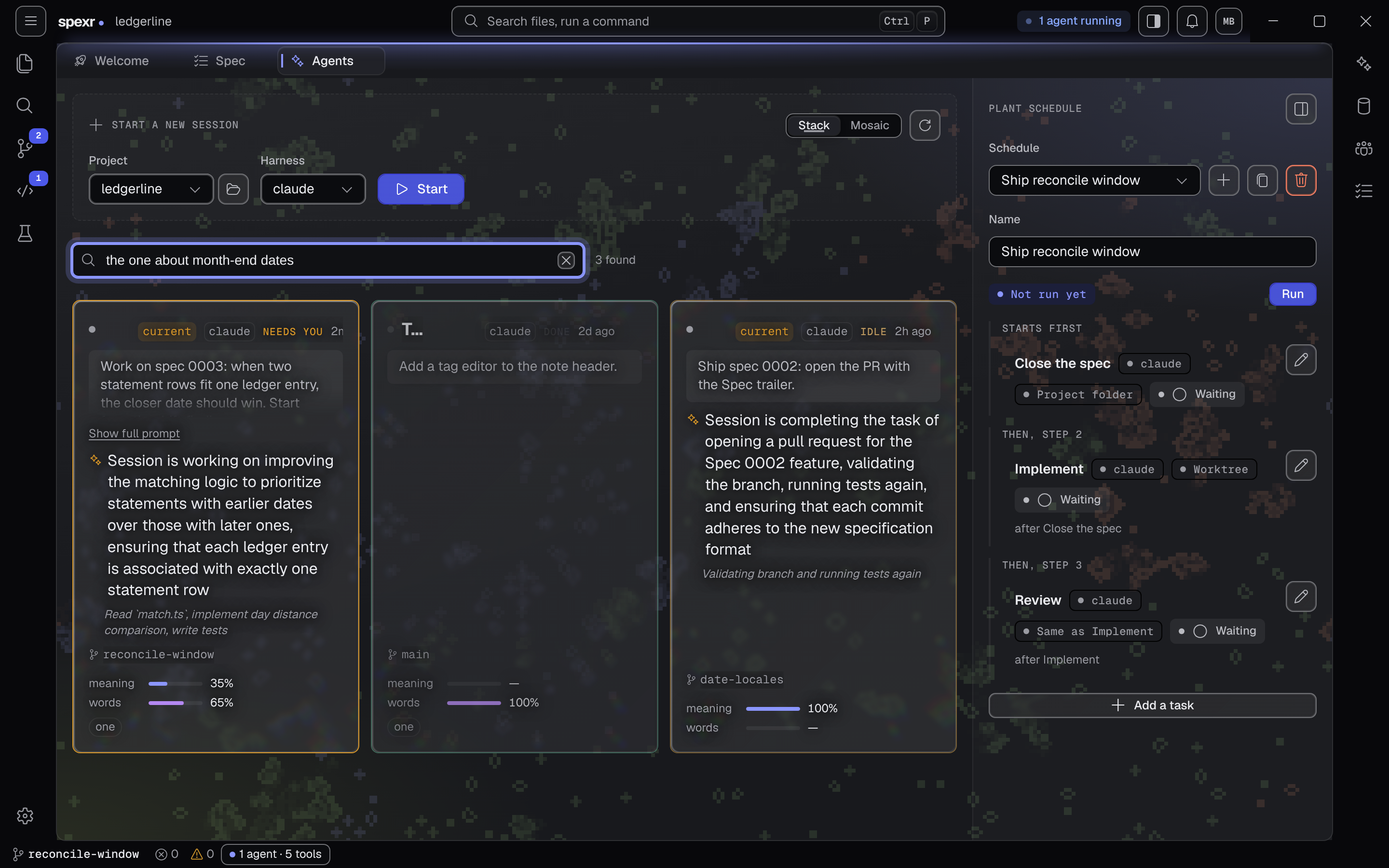
Every agent session on one wall.
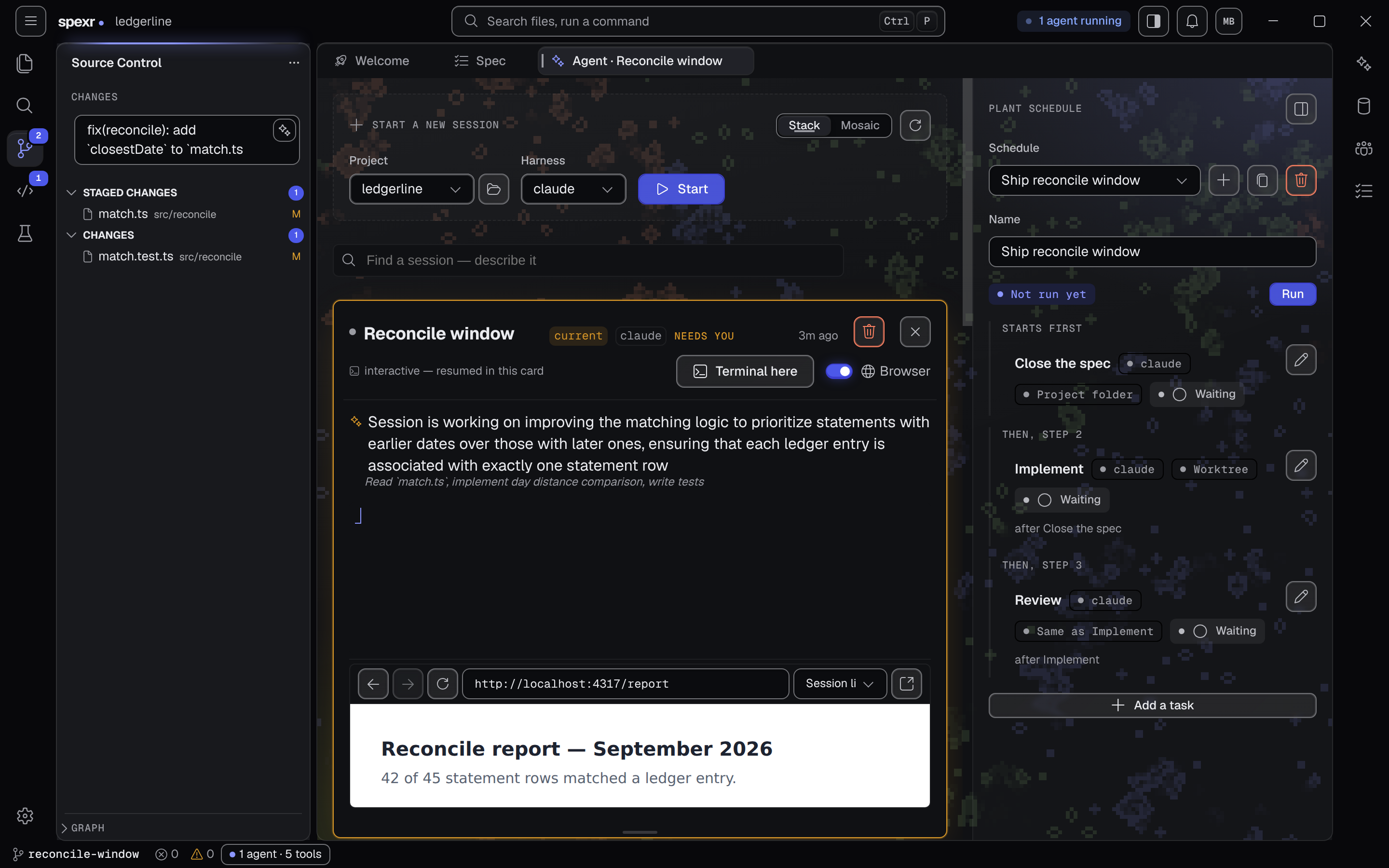
Darkfactory lists every local agent session, grouped by project. Each card shows whether the agent is working, idle, done or waiting for you, and a summary written on your machine.
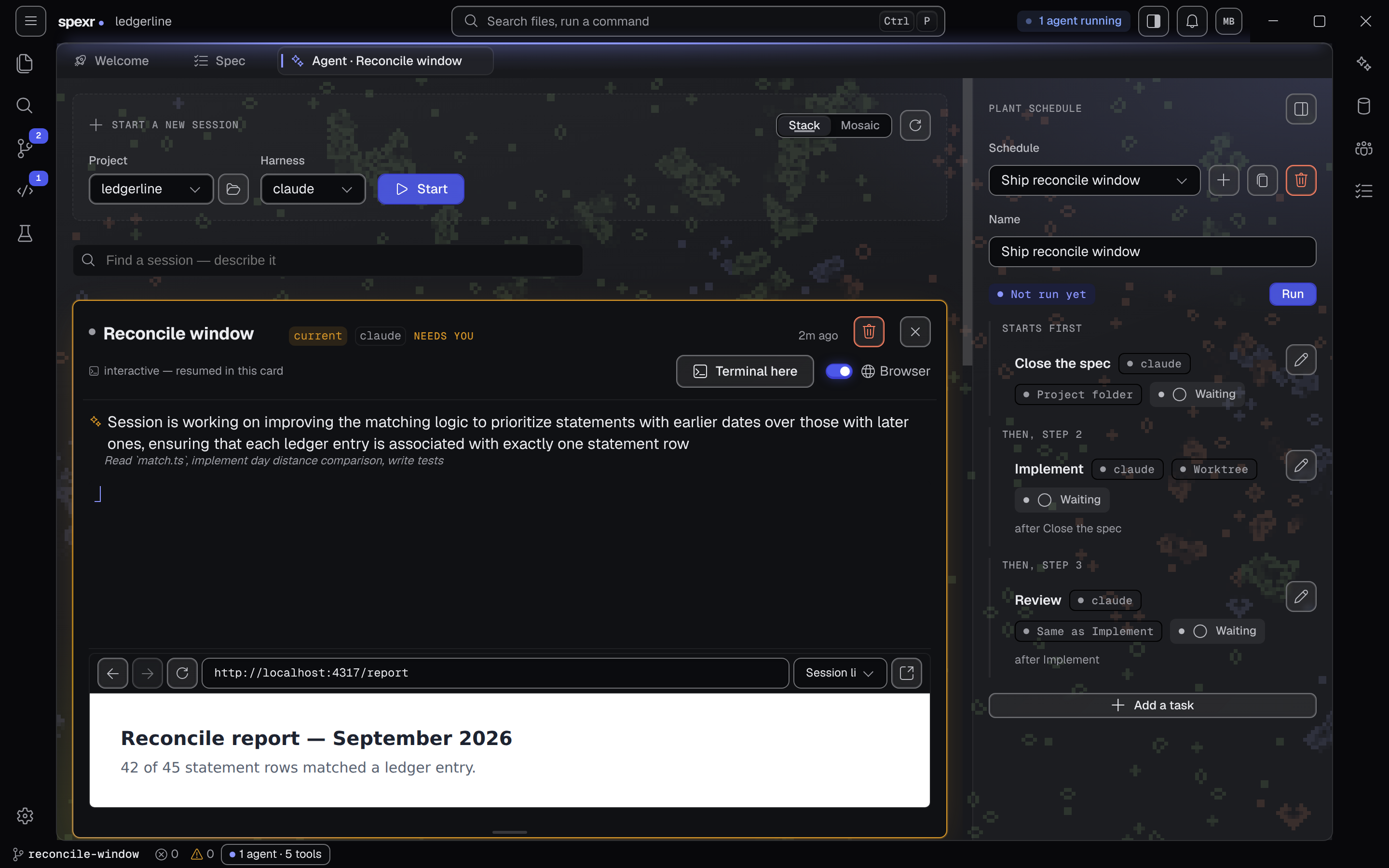
Click a card to pick the session up. Find an old one by describing it, open the pull request or local page it produced, and chain tasks into a schedule where each one waits for the ones it needs.
Experts
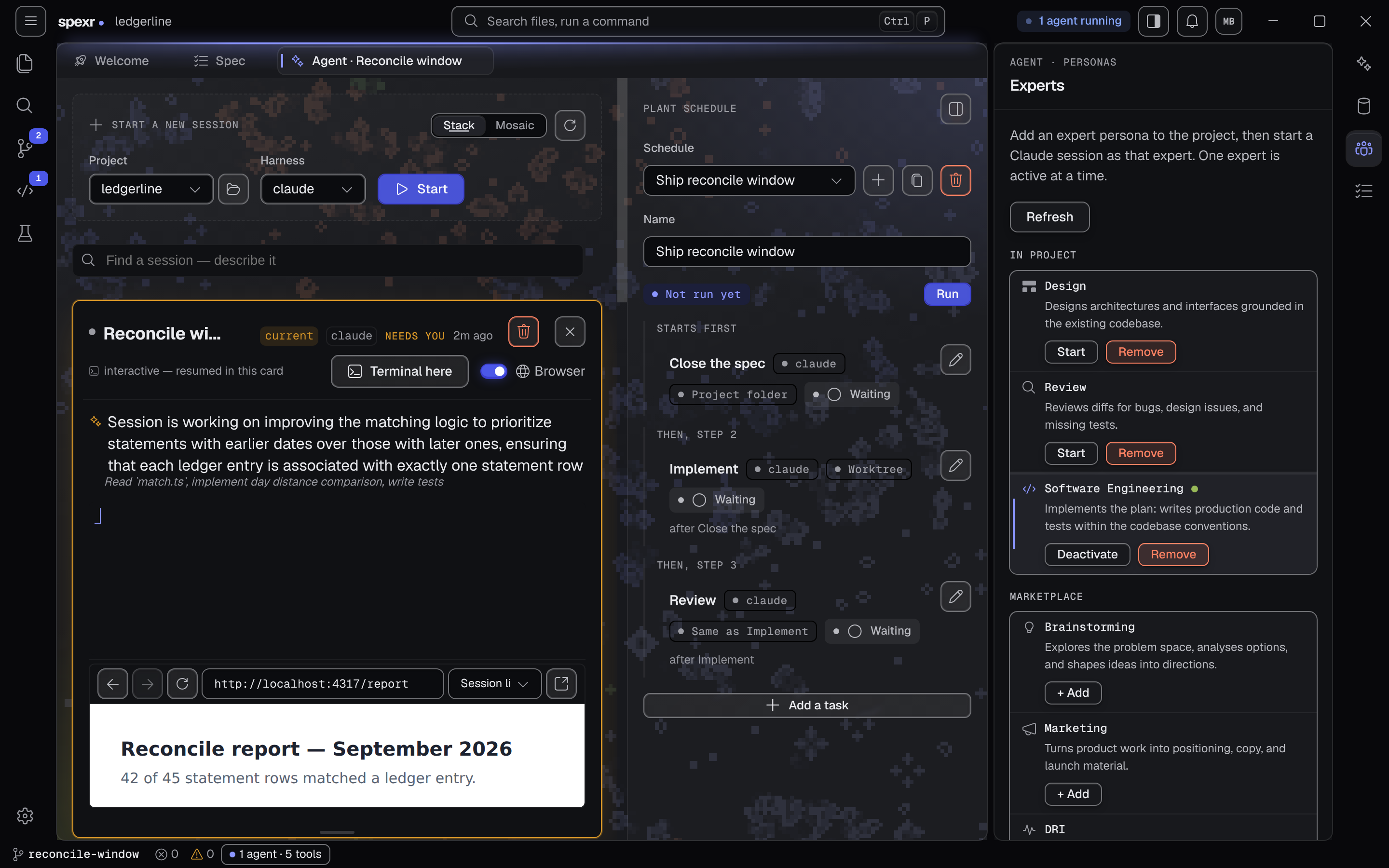
The right expert for each step.
SPEXR ships seven built-in expert personas, such as Design, Review and Software Engineering. Add the ones a project needs, and the expert that fits each workflow step switches on when that step goes to the agent.
Memory
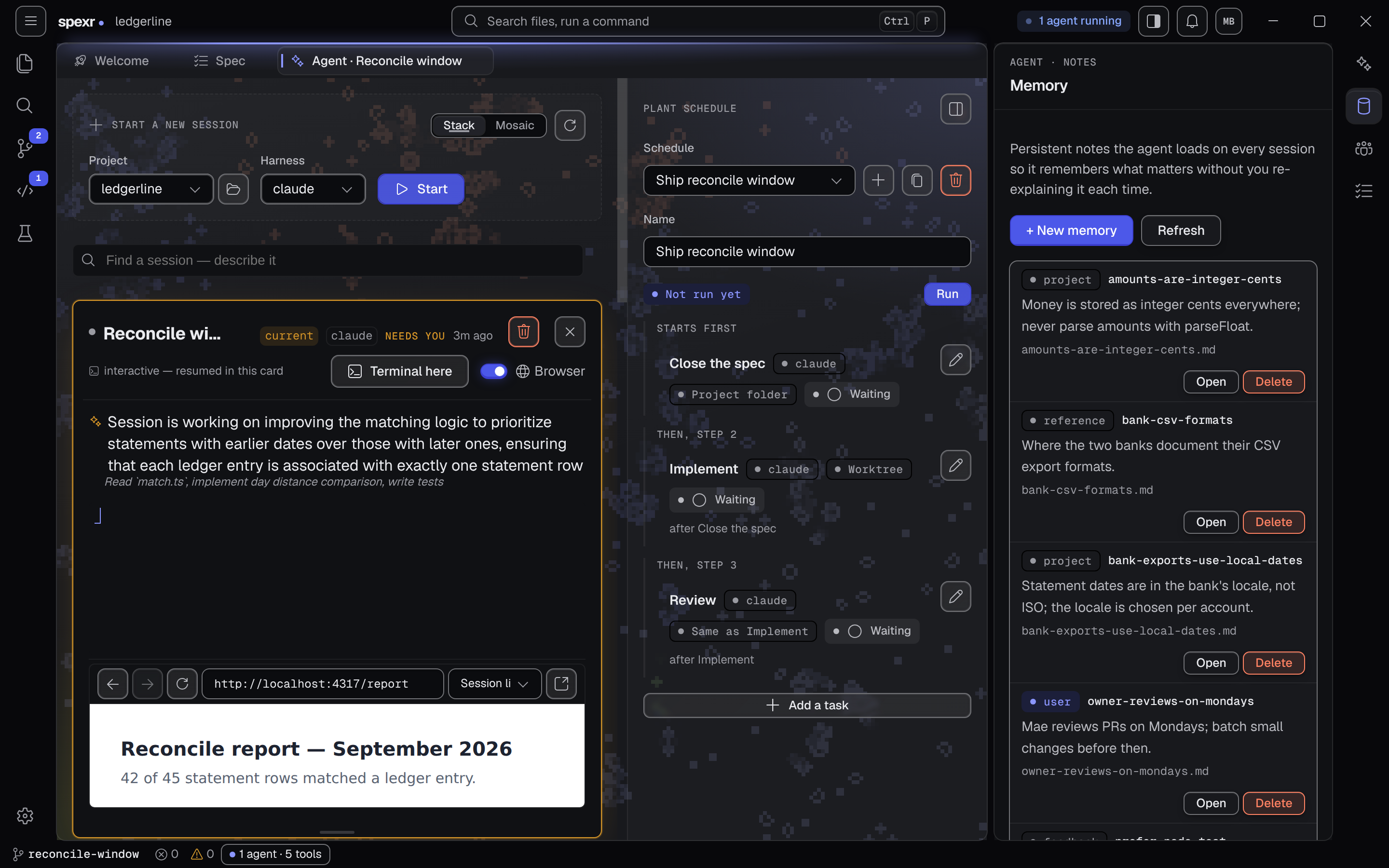
What the agent learns, it keeps.
Memory is plain Markdown notes, kept for you and for the project, and loaded into every Claude session. Move a note between the two as it proves useful beyond one project.
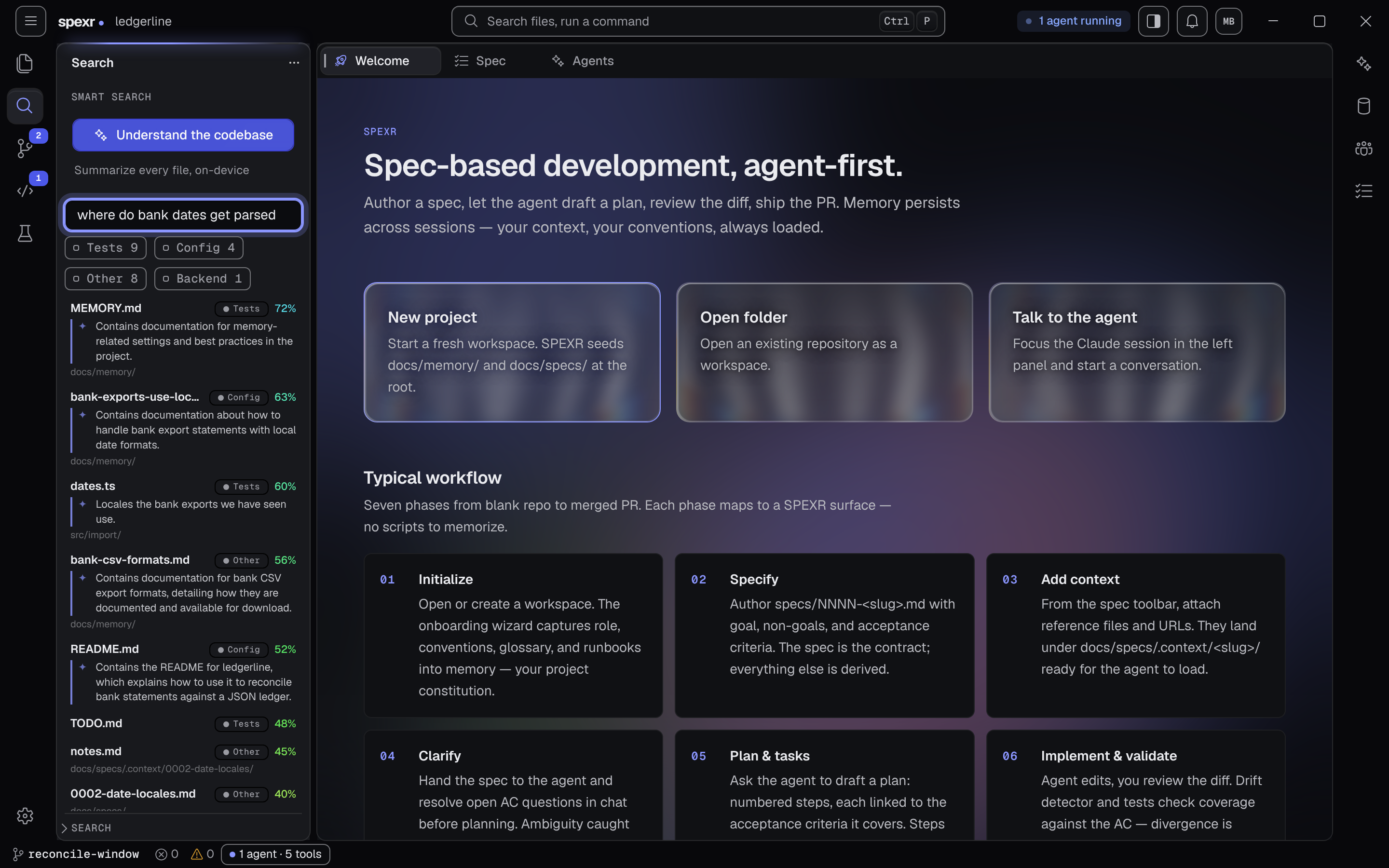
Smart search
Search by meaning, on your machine.
Ask in plain words and SPEXR ranks files by meaning and by keyword together. A local model writes a one-line description of each file. Nothing leaves your machine.
Also in the box
Git, and more than one agent.
Git is built in: stage, commit, push and branch without leaving the IDE. The local model writes the commit message from the staged diff.
How it runs
Your agent, your machine.
- SPEXR calls no hosted model API. It starts the agent CLI you have installed and uses its sign-in.
- Summaries, search and commit messages come from small models that run on your machine.
- Open source under the MIT licence, for macOS, Windows and Linux.
- Public beta: it works day to day, and it still changes often.